
Nepal Approves 1,200 MW of Electricity Exports to India and Bangladesh: 37 Hydropower Projects Listed

A project-wise export portfolio shows that Nepal has approved electricity export capacity of 1,200 MW from 37 hydropower projects for trade with India and Bangladesh, marking another major step in the country's transition toward becoming a regional power exporter.
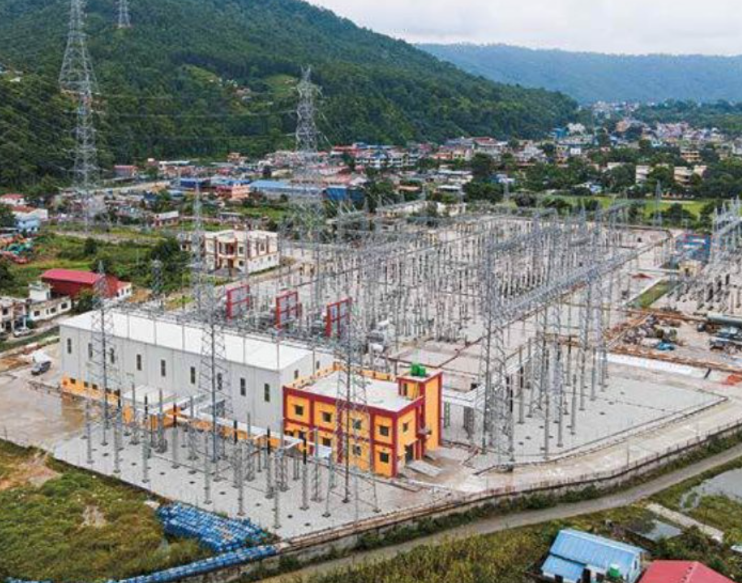
The 37 hydropower projects listed in the export portfolio have a combined installed capacity of 1,251.6 MW, while their approved export capacity totals 1,200 MW.
The distinction between the two figures is important. The 1,251.6 MW figure represents the combined installed capacity of the listed projects, whereas 1,200 MW is the approved capacity for electricity export under the project-wise export portfolio. The difference should not automatically be described as transmission loss because the supplied project document does not establish that the entire difference is attributable to transmission losses.
37 Hydropower Projects in Nepal's Export Portfolio
The projects are classified under three trading modalities: Indian Energy Exchange (IEX), Bilateral (Medium) and Trilateral (Medium).
| Trading Modality | Number of Projects | Approved Export Capacity |
|---|---|---|
| IEX | 13 | 519.65 MW |
| Bilateral (Medium) | 22 | 640.35 MW |
| Trilateral (Medium) | 2 | 40 MW |
| Total | 37 | 1,200 MW |
The project-wise document lists all 37 projects and records total installed capacity of 1,251.6 MW and total approved export capacity of 1,200 MW. 3 4

519.65 MW Approved Under the IEX Route
Thirteen projects in the portfolio are listed under the Indian Energy Exchange (IEX) modality, with a combined approved export capacity of 519.65 MW.
The IEX group includes major Nepal Electricity Authority projects such as Kaligandaki A, Marsyangdi and Middle Marsyangdi, as well as several private-sector hydropower projects.
Kaligandaki A has an installed capacity of 144 MW and an approved export capacity of 140 MW. Marsyangdi has 69 MW installed and 67 MW approved for export, while Middle Marsyangdi has 70 MW installed and 68 MW approved for export. 5
Other projects in the IEX category include Solu Khola, Likhu-IV, Upper Dordi A, Kabeli B-1, Lower Modi, Upper Balephi A, Seti Nadi HPP, Upper Tadi Khola, Upper Kalangagad and Upper Chameliya.
India's CEA Approval Is a Key Gateway to the Market
Nepalese hydropower projects cannot simply enter India's electricity market after generating power. Cross-border electricity trade is governed by India's regulatory framework, with the Central Electricity Authority (CEA) serving as the designated authority for the relevant import and export approvals.
The CEA's official cross-border electricity database records project-wise approvals for electricity imported by India from Nepal, including the applicant, transaction mode, power exchange or buyer, approved quantum and approval period. 6
For example, the CEA has listed approvals for Nepal's Kaligandaki A, Marsyangdi and Middle Marsyangdi projects for power exchange transactions, with specified approval periods. 7
This makes India's regulatory approval an important part of Nepal's electricity export process, particularly for projects seeking access to India's power market.
IEX Approvals Are Granted for Specific Periods
IEX access should not be understood as a permanent, one-time approval for every project.
The CEA's official records show that project-wise approvals are granted for specified periods. The approval periods can vary from project to project and from one approval to another.
For instance, CEA records show approvals for Kaligandaki A, Marsyangdi and Middle Marsyangdi covering the period from May 19, 2025 to April 30, 2026. Other projects have different approval periods. 8
Therefore, projects seeking continued access to India's power exchange market need to go through the applicable approval process again as their existing permissions expire.
Bilateral Medium-Term Trade Accounts for 640.35 MW
The largest category in the project portfolio is Bilateral (Medium), covering 22 projects with a combined approved export capacity of 640.35 MW.
Among the major projects are Solu Khola (Dudhkoshi) with 83.4 MW approved for export, Lower Solu with 80 MW and Likhu 1 HPP with 75 MW. 9
The list also includes Likhu-2, Likhu Khola A, Thulo Khola, Super Kabeli Khola-A, Super Kabeli, Maya Khola, Dordi-1 Khola, Down Piluwa, Lower Khare, Upper Khimti, Upper Khimti II, Modi, Gandak, Dudhkunda Khola, Upper Solu, Mewa Khola HPP and Karuwa Seti HPP. 10
Bilateral electricity trade operates under contractual arrangements with designated buyers. The CEA's records also show multi-year approval periods for some bilateral arrangements, demonstrating that their structure differs from individual power-exchange approvals. 11
Nepal Is Currently Exporting 40 MW to Bangladesh
Bangladesh has become an important new destination for Nepal's hydropower exports through a trilateral Nepal-India-Bangladesh arrangement.
At present, Nepal is exporting 40 MW of electricity to Bangladesh.
The 40 MW comes from two hydropower projects listed in the export portfolio: Trishuli, with an approved export capacity of 18.6 MW, and Chilime, with 21.4 MW. Together, the two projects account for 40 MW. 12
Nepal's electricity reaches Bangladesh through India's transmission network. The power is transmitted from Nepal into India through the Dhalkebar-Muzaffarpur 400 kV transmission line and then through the Baharampur-Bheramara 400 kV line into Bangladesh. 13
In other words, Nepal supplies the electricity, while India's transmission system provides the route through Indian territory to Bangladesh under the trilateral arrangement.
40 MW Bangladesh Export Has a Five-Month Seasonal Arrangement
The current 40 MW arrangement is not a year-round continuous export. Under the existing tripartite arrangement, Nepal exports the electricity to Bangladesh during the designated monsoon-season period.
The agreement provides for 40 MW of electricity exports annually from June 15 to November 15. 14
Nepal first exported electricity to Bangladesh for 12 hours on November 15, 2024. The regular seasonal arrangement followed the tripartite agreement between the Nepal Electricity Authority, Bangladesh Power Development Board and India's NVVN. 15
Additional 20 MW Is Ready but Awaiting India's Approval
Nepal and Bangladesh have agreed to pursue an additional 20 MW of electricity exports under the existing arrangement.
Bangladesh is ready to receive the additional electricity and Nepal is ready to supply it, but the additional 20 MW has not yet started flowing because the required approval from India's Central Electricity Authority has not been granted.
According to officials cited by The Kathmandu Post, India withheld approval because of transmission-line capacity constraints. The India-Bangladesh transmission line involved in the arrangement has a capacity constraint that has prevented the additional allocation from being approved. 16
The additional 20 MW will also require the necessary procedures and approval on the Indian side, followed by the relevant tripartite arrangement.
Bangladesh Exports Could Rise From 40 MW to 60 MW
| Bangladesh Power Trade | Capacity | Status |
|---|---|---|
| Current export | 40 MW | Currently being exported during the approved seasonal period |
| Additional proposal | 20 MW | Awaiting required Indian approval |
| Potential total | 60 MW | If the additional 20 MW is approved |
If the additional 20 MW receives the necessary Indian approval and the required transmission arrangements are completed, Nepal's Bangladesh-bound electricity exports would rise from 40 MW to 60 MW. 17
Why India's Transmission Network Matters to Nepal-Bangladesh Trade
The Bangladesh route demonstrates the strategic importance of India to Nepal's regional electricity trade.
Nepal and Bangladesh do not have a direct electricity transmission connection. Nepal therefore depends on India's transmission network to move the electricity from Nepal to Bangladesh.
This means that even when Nepal is ready to sell additional electricity and Bangladesh is ready to purchase it, the transaction still depends on the required Indian regulatory approval and available transmission capacity.
The stalled 20 MW expansion is a clear example of how transmission constraints can limit regional electricity trade even when electricity supply and demand exist on both sides.
Nepal's Electricity Exports to India Remain Much Larger
Although Bangladesh has become an important new market, India remains the dominant destination for Nepal's electricity exports.
Nepal sells electricity in India's market through power exchanges, including the Indian Energy Exchange, as well as through bilateral medium-term arrangements.
The CEA's official database records Nepalese projects approved for both power-exchange and bilateral transactions, with project-wise approved quantities and periods. 18
According to NEA's FY 2024/25 annual report, approximately 2,380 million units (MU) of electricity were exported to India during the fiscal year. NEA also reported that Nepal began exporting 40 MW to Bangladesh from June 15, 2025. 19
Electricity Export Capacity Is Not the Same as Actual Export
The difference between MW of approved capacity and GWh or MU of actual electricity exported is essential when interpreting Nepal's power-trade figures.
MW measures power capacity, while GWh or MU measures the amount of electrical energy traded over a period of time.
Therefore, Nepal having 1,200 MW of approved export capacity does not mean that 1,200 MW is being exported continuously every hour of the year.
Actual exports depend on hydropower generation, seasonal river flows, project availability, transmission capacity, market demand, regulatory approvals and the terms of individual trading arrangements.
Seasonal Hydropower Generation Shapes Nepal's Export Market
Nepal's electricity generation is strongly seasonal because a large share of its hydropower fleet consists of run-of-river projects.
During the monsoon, river flows increase and hydropower generation rises, creating electricity surpluses that can be sold in regional markets when transmission and market approvals are available.
During the dry season, river flows decline and domestic generation falls. Nepal may then need to import electricity from India to meet domestic demand.
This seasonal pattern makes cross-border power trading particularly important for Nepal because regional markets provide an outlet for surplus electricity during periods of high generation.
Transmission Infrastructure Will Determine Future Export Growth
More hydropower generation alone will not automatically translate into more electricity exports.
Nepal also needs adequate domestic transmission infrastructure to evacuate power from generation sites and sufficient cross-border capacity to move electricity into regional markets.
The Bangladesh case shows the importance of this infrastructure. An additional 20 MW has been proposed, but the electricity cannot flow until the required Indian approval and transmission arrangements are secured.
As Nepal's hydropower generation continues to grow, expanding cross-border transmission corridors will therefore be critical to converting surplus generation into reliable export revenue.
What the 1,200 MW Portfolio Means for Nepal
The 37-project portfolio shows that Nepal's hydropower sector is increasingly being developed with regional electricity markets in mind.
The approved export portfolio combines exchange-based sales, bilateral medium-term arrangements and the trilateral Bangladesh route.
The country's regional electricity trade is therefore no longer limited to a single market mechanism. Nepal is building multiple routes to sell surplus hydropower, although access to those markets remains dependent on regulatory approval, contractual arrangements and transmission capacity.
For Nepal, successful expansion of electricity exports could increase foreign-currency earnings, improve the utilization of surplus hydropower during high-generation periods and strengthen regional energy cooperation.
For private hydropower developers, access to regional markets can also improve the commercial prospects of projects whose generation exceeds domestic demand during the wet season.
The Real Challenge Is Turning Approved Capacity Into Actual Exports
The headline figure of 1,200 MW is significant, but it represents approved export capacity rather than a guaranteed continuous export volume.
Behind that figure are 37 individual hydropower projects, different trading modalities, India's project-wise regulatory approvals, seasonal generation patterns and cross-border transmission constraints.
The Bangladesh experience makes the situation particularly clear. Nepal is currently exporting 40 MW to Bangladesh, while an additional 20 MW has been proposed. If the necessary Indian approval is secured, the Bangladesh-bound export could rise to 60 MW.
For Nepal's long-term hydropower strategy, the priority is therefore not only to build more generation capacity but also to secure market access, maintain regulatory approvals and expand the transmission infrastructure required to move electricity to regional buyers.
Frequently Asked Questions About Nepal Electricity Export
How much electricity export capacity has Nepal approved?
The supplied project-wise portfolio lists 1,200 MW of approved export capacity from 37 hydropower projects, with combined installed capacity of 1,251.6 MW. 20
Why is installed capacity 1,251.6 MW but approved export capacity 1,200 MW?
The project document lists the two figures separately. The 1,251.6 MW figure is total installed capacity, while 1,200 MW is the approved export capacity. The document does not establish that the entire difference is caused by transmission losses.
Who approves Nepal's electricity exports to India?
India's Central Electricity Authority (CEA), acting as the designated authority under India's cross-border electricity framework, handles the relevant approvals. 21
Do IEX projects need approval for specific periods?
Yes. CEA grants project-wise approvals for specified periods, and projects need to obtain the applicable approval again when their existing permission expires. The approval periods can vary by project. 22
How much electricity is Nepal currently exporting to Bangladesh?
Nepal is currently exporting 40 MW to Bangladesh under the seasonal trilateral arrangement. 23
Which projects supply the 40 MW exported to Bangladesh?
The 40 MW comes from Trishuli with 18.6 MW and Chilime with 21.4 MW. 24
How does electricity travel from Nepal to Bangladesh?
The electricity passes through India's transmission network. It enters India through the Dhalkebar-Muzaffarpur 400 kV line and then reaches Bangladesh through the Baharampur-Bheramara 400 kV line. 25
Why has the additional 20 MW to Bangladesh not started?
The additional 20 MW is awaiting the required Indian approval. Indian authorities have cited transmission capacity constraints in connection with the proposed increase. 26
Could Nepal export 60 MW to Bangladesh?
Yes. If the additional 20 MW receives the required approval and the necessary arrangements are completed, Bangladesh-bound exports could increase from 40 MW to 60 MW. 27
How many hydropower projects are listed for IEX trade?
The supplied project portfolio contains 13 projects under the IEX category, with combined approved export capacity of 519.65 MW. 28
How many projects are under bilateral medium-term trade?
The portfolio contains 22 projects under the Bilateral (Medium) category, with combined approved export capacity of 640.35 MW. 29
How many projects are included in the total export portfolio?
The project-wise document contains 37 hydropower projects, with 1,251.6 MW of combined installed capacity and 1,200 MW of approved export capacity. 30
Related Reading
Read more about Nepal's electricity export strategy and regional power trade in Nepal's electricity export strategy and power trade with India.
Official Sources
Nepal Electricity Authority: NEA official website
India Central Electricity Authority: CEA Cross-Border Electricity Import and Export
Bangladesh electricity trade: The additional 20 MW and current 40 MW status were cross-checked against reporting on the Nepal-India-Bangladesh power trade arrangement. 31
Editorial note: The 1,200 MW figure refers to the approved export capacity of the 37 projects listed in the supplied project-wise export document. Actual electricity exports vary according to generation, season, market approvals, contractual arrangements and transmission availability.
Comments